Skip to content

Book review: “The Town That Food Saved” by Ben Hewitt

I know a few people who share my annoyance with the overuse of the word sustainable. They might be annoyed for reasons different than mine, however. I think they get annoyed by its use as virtually meaningless marketing puffery (think “green” automobiles or “green” nuclear power plants). When Ed Begley Jr. calls bamboo flooring shipped across the Pacific Ocean for installation in a McPalace in the Los Angeles basin sustainable, can that word be said to have any useful meaning?

It seems to me that the term sustainable should apply to processes rather than products. Only then do we get to what is, in my mind, a fair definition of sustainable: A given process is sustainable when it can be repeated over and over until the sun turns into a red dwarf and toasts planet Earth to a crisp. Any “waste” from such a process would naturally (pun intended) be a useful input for some other process, creating a closed cycle.

OK, so we have the Sun constantly pumping energy into the system, so it’s not technically closed. If you don’t get the concept of a closed natural cycle, either you haven’t thought about it with an open mind long enough, or you’ve spent too much time in the presence of concrete streets and air conditioning.

Ben Hewitt explains the absence of the word sustainable from his book The Town That Food Saved for both of the above reasons. First, because it has been “willfully corrupted by people who would very much like to sell you a hybrid SUV or an Energy Star-rated flat-screen TV with no money down and zero percent interest for 60 months.” Second, to avoid perverting the definition of sustainable: “Is there a version of agriculture that is truly sustainable? Probably so. Is there a version of agriculture that is truly sustainable and able to feed 7 billion people? Almost certainly not.”

There is probably a third reason for the word’s absence. Hewitt’s book isn’t about sustainable agriculture. It’s about localized, decentralized food production, along with the characters in his corner of the world who are into that scene.

Taking the 30,000-foot perspective, Hewitt proffers a four-criteria system for judging food systems. In his opinion, a “healthy decentralized food system” must 1. offer economic viability for small-scale food producers, 2. be based on sunshine, 3. feed the locals, and 4. be circular.

After offering this framework for analysis, Hewitt proceeds to the scuttlebutt. The setting is Hardwick, Vermont (and environs), population 3900, and this little town (and environs) is filled with a cast of various and quirky characters worthy of Northern Exposure. The book is basically a study of the various characters there who are involved in the local food movement, from the ADD-addled media whore seedsman to the couple who will drive to your farm and kill and butcher your farm animals for you. Amongst tales of days spent with these folks, Hewitt inserts appropriate amounts of astute commentary and pontification.

In all it makes for an enjoyable read. If you’re a fan of Michael Pollan’s books, you’ll probably like Hewitt’s.
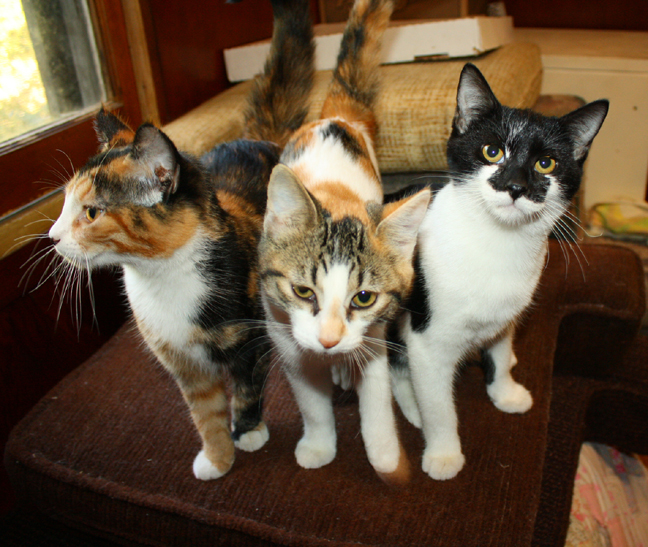

Three kittens

“IOU” by John Lanchester

These days, no pop financial book should fail to take the opportunity to distinguish between real wealth (i.e. things that humans want, e.g. gasoline, pizza, houses, etc.) and financial capital (chits and symbols in a social system that serves to allocate real wealth). Why is this so important? Because in today’s highly developed and specialized economy, folks seems to confuse the two, to the detriment of their (and our) reasoning and conclusions.

Early in his book “IOU: Why everyone owes everyone and no one can pay,” John Lanchester has just such an opportunity and either doesn’t see it or chooses not to take it. He writes about the great destruction of wealth that occurred when the dot-com bubble crashed around the turn of the century.

In actuality, the crash itself involved little or no destruction of real wealth. During the crash, the financial system (via buyers and sellers of securities) simply reallocated financial capital to better reflect the realities of real wealth. The chits and symbols of the financial system were shuffled so that those who used real wealth poorly (those who invested in outfits like pets.com, peapod.com, etc.) were stripped of their ability to waste real wealth. Those chits and symbols were transferred to those who might be expected to use real wealth in a better manner (or at least less poorly).

Financial capital does not equal real wealth. Why do so many pundits and writers overlook this, or fail to mention this, or just plain get it wrong? Perhaps because in a real free market, financial capital and real wealth might be much closer to being equivalent. In the hyperregulated economy of the U.S. with legal tender laws, a single currency and fractional-reserve banking, this certainly is not the case.

Lanchester is not a leftist. He does, however, make an error common to pundits of that and other persuasions, viz. equating what exists (or existed at some mythical point in the past) in the U.S. with a free market. With the onerous and varied systems of taxation and regulation that currently exist in the U.S., the notion that there is a free market in the U.S. is simply nonsensical. The U.S. has a free-market system only in the pages of its schoolchildren’s textbooks. If you doubt this, I invite you to engage in some simple, peaceful activity that fulfills a basic human need, like erecting a shelter for your family or selling wine to your neighbor or operating a vehicle on the street, and see how many taxing and regulating busybodies swoop in where you thought there was free market.

A useful distinction Lanchester introduces is between a country’s legal framework (i.e. the laws and regs on the books) and its regime (i.e. the human beings who choose how to enforce those laws and regs). Lanchester should go for the trifecta and add something like “national mythology” to the mix. Perhaps that would help him see that, while the U.S. has a well-developed free-market national mythology, its legal framework and regime are in actuality quite opposed to the free market. Insidiously, those who benefit from market restrictions are often the most vocal promoters of the free-market mythology. Perhaps the beneficiaries of market restrictions think that the masses pay more attention to what the beneficiaries say than what they do. Perhaps the beneficiaries are right.

Lanchester writes that Keynes was the greatest economist. This may be true, if the criteria for greatness is popularity or general acceptance. Keynes is not the greatest economist, however, if you use the predictive ability of his theories as a criteria for evaluation.

Lanchester writes that economists generally failed to predict this latest crash and questions the viability of a profession that has failed in such a dramatic manner. While I agree with the latter sentiment, I question the former. A whole school of economists – Austrian economists – generally predicts that busts will follow asset booms driven by monetary expansions. Those same economists recognized that the Fed’s low interest rates of the first part of the 21st century were fueling a monetary expansion and an asset boom. Those same economists predicted the resulting bust. There were plenty of economists predicting this particular crash. They just weren’t the ones being invited to appear on CNN.

If you read only one book about the crash, make it “The Big Short” by Michael Lewis. Lewis got to know several people who got rich betting that the crash would occur, and he tells their stories well. “IOU” is more polemic than reportage, and I’ve got so much polemic in my head already that I don’t need any more. However, Lanchester seems to be a thoughtful and reasonable person. “IOU” is a worthwhile read if you need a polemic and are tired of reading mine.

Frog on cistern water pump

“5 Steps to a Dry Basement” by Ronald K. Gay

The gist of this gem is that most wet basement problems are surface-water problems. In other words, fix your gutters, punks. With respect to foundation drainage systems, Appendix B helpfully quotes part of the International Code Council’s International Residential Code.

R405.1 Foundation Drainage specifies gravel or crushed stone drain at least 1 foot beyond the footing and 6 inches above the top of the footing with a filter membrane. Drain tile to be on at least 2 inches of rock and covered with at least 6 inches of rock.

R405.2.3 Drainage system specifies a sump at least 24 inches in diameter or 20 inches square, at least 24 inches below the bottom of the basement floor.

R406.2 Concrete and masonry foundation waterproofing specifies from top of footing to grade (1) 2-ply hot mopped felt, (2) 55-pound rolled roofing, (3) 6-mil PVC, (4) 6-mil polyethylene or (5) 40-mil polymer-modified asphalt.

Aunt Lenda

IMG_0817.1x1.web

River-town clock

IMG_0855_pt.cropped.1x1.sat

Scoop the poop, fall sunset

IMG_0028.small.web

Freedom lawn

IMG_4994.4x3.web

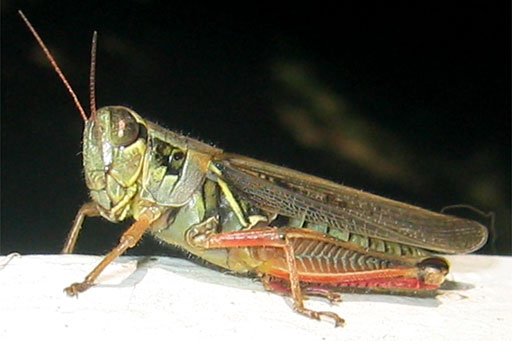
Grasshopper in the lunchtime sun

IMG_4966.rotated135andcropped.web

This site is protected by Comment SPAM Wiper.